How to Sell Print on Demand Products From a Viral Trend (The Empire State Case)
A viral stunt turned into hundreds of near-identical Etsy listings in five days. Does jumping on the trend actually pay off? Here's the honest print on demand math, and the legal lines nobody mentions.

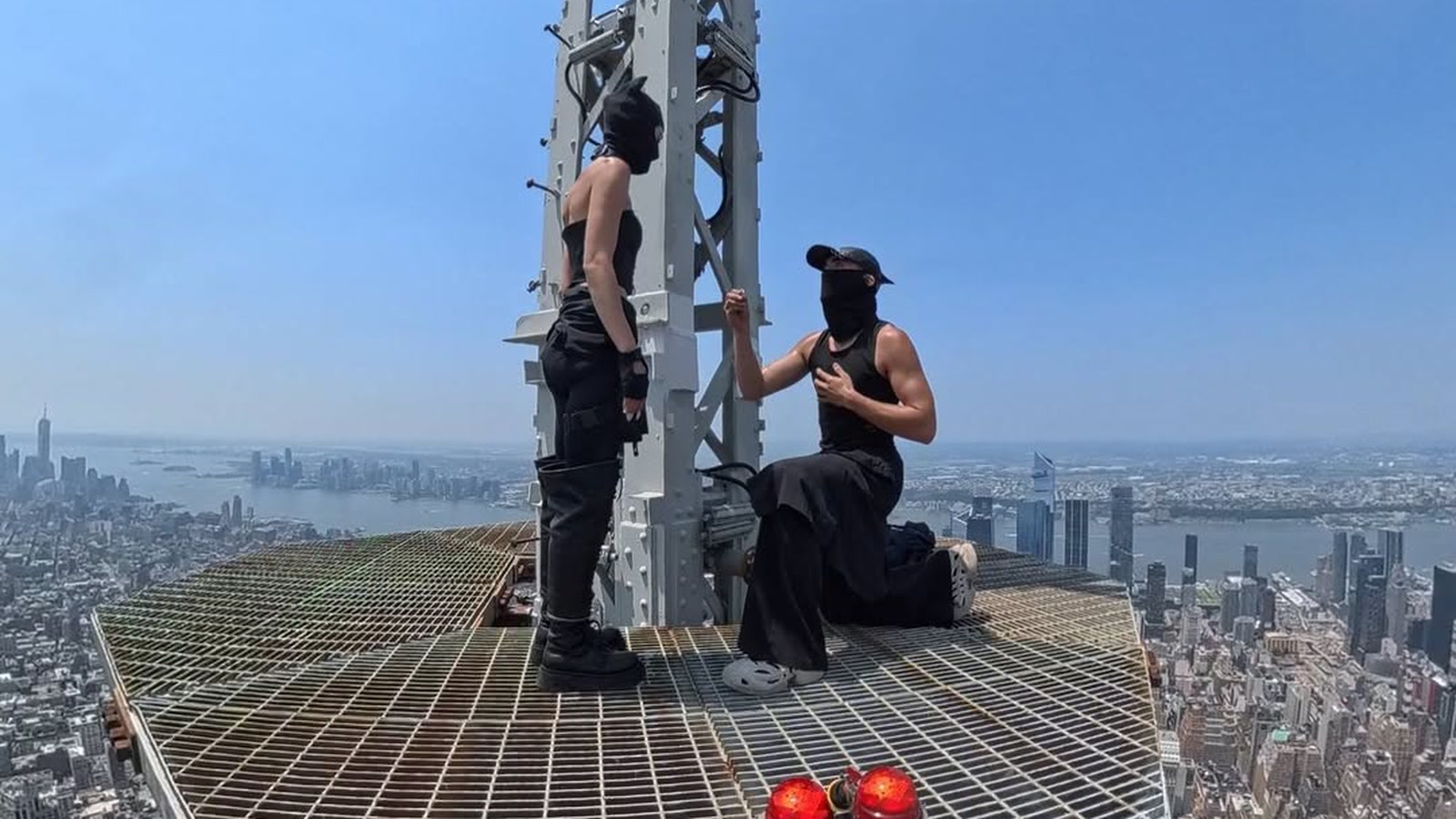
Last week, two people climbed the Empire State Building without permission, got engaged at the top, and got arrested on the way down. The video circled the planet in a day. Five days later, Etsy had hundreds of listings built around that moment, almost all of them marked down. Here's the answer up front: jumping on a trend the second you spot it rarely pays off. The seller who wins is fast, knows where the legal line sits, and sells the feeling instead of the event. This post walks through that difference with the real numbers and the honest limits.
What happened: the Empire State proposal and the internet meltdown
On July 1, 2026, Russian rooftopper couple Angela Nikolau and Ivan Beerkus climbed the unauthorized antenna of the Empire State Building, roughly 440 meters up. They stayed at the top for about half an hour, unfurled a banner quoting Jimi Hendrix ("When the power of love beats the love of power the world knows peace"), and Ivan got down on one knee and proposed. They kissed, then got arrested on the way down.
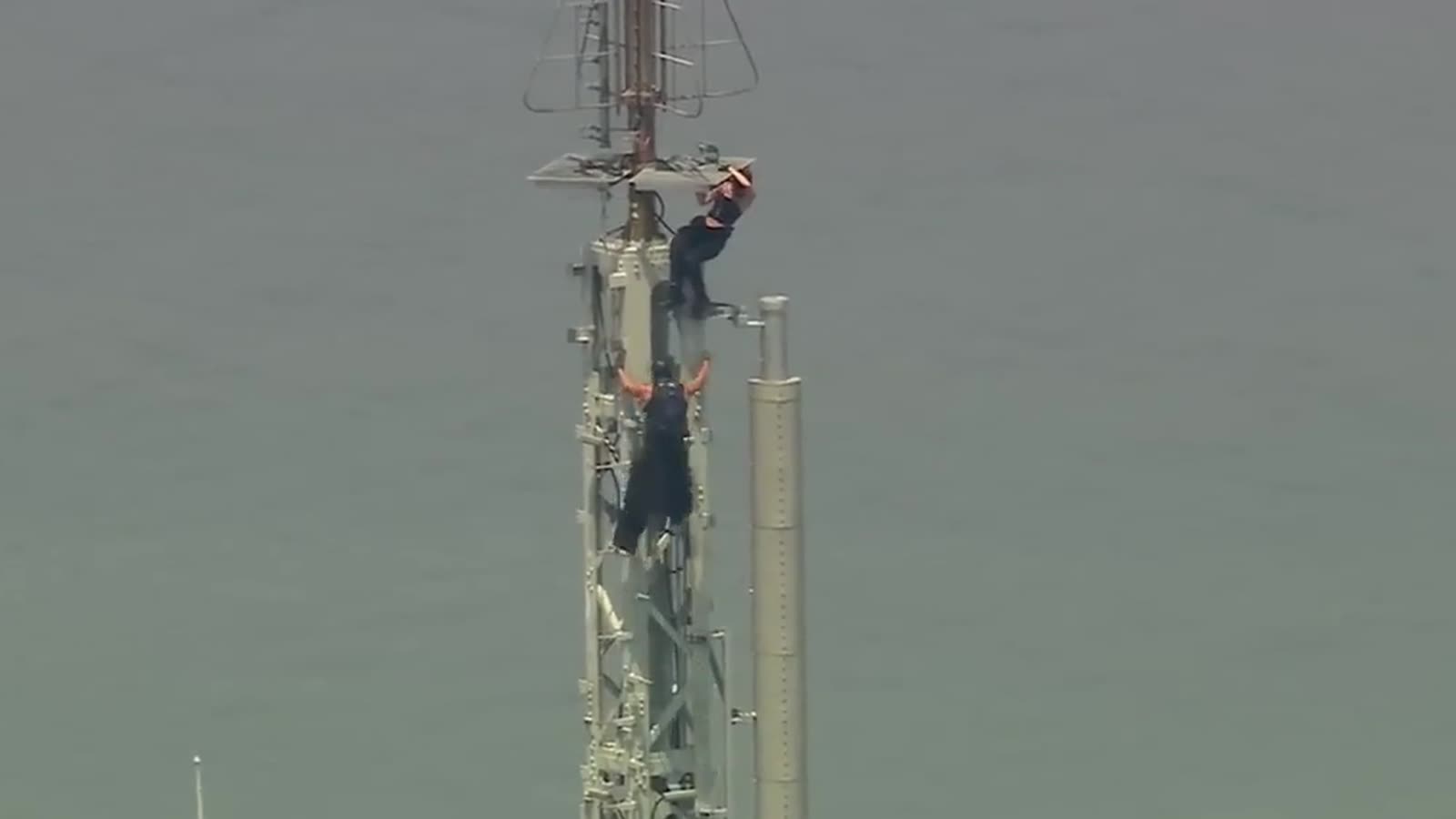
They weren't random climbers, either. The 2024 Netflix documentary "Skywalkers: A Love Story" told their story, so they came with a built-in audience and a "love plus adrenaline" brand already attached. The footage spread everywhere within hours. And right there, out of sight of most viewers, a second race quietly started.
Not every viral moment is a product trend
This is the distinction most sellers miss. Viral moments split into two kinds:
- Video trends. People watch, share, and comment. Plenty of emotional or news weight, but nothing you'd wear.
- Product trends. People don't just watch, they want to wear it, hang it on a wall, gift it. Usually there's a phrase, a lovable character, or a wearable aesthetic underneath.
At first glance, the Empire State story was a video trend. "Two climbers got arrested" doesn't read like a t-shirt. But here's the interesting part: the phrase in the moment (a Hendrix line about the power of love) and the visual theme (a nighttime New York skyline, one grand gesture) turned out to be wearable. Sellers who sold that theme, not the event itself, are the ones who turned it into an actual product trend.
The lesson: the moment you see something go viral, ask first, "Do people want to share this, or wear it?" Failing to separate those two is the most expensive mistake a new seller makes.
How do you know you're already late?
Price is the clearest tell. When I searched Etsy while the story was five days old, the first page was already packed with listings built around it: t-shirts, stickers, magnets, digital downloads. Etsy had even generated its own filter tags for the theme ("Peace Quote," "NYC Skyline," "Protest Inspired"), which means the algorithm had already recognized it as a trend cluster.
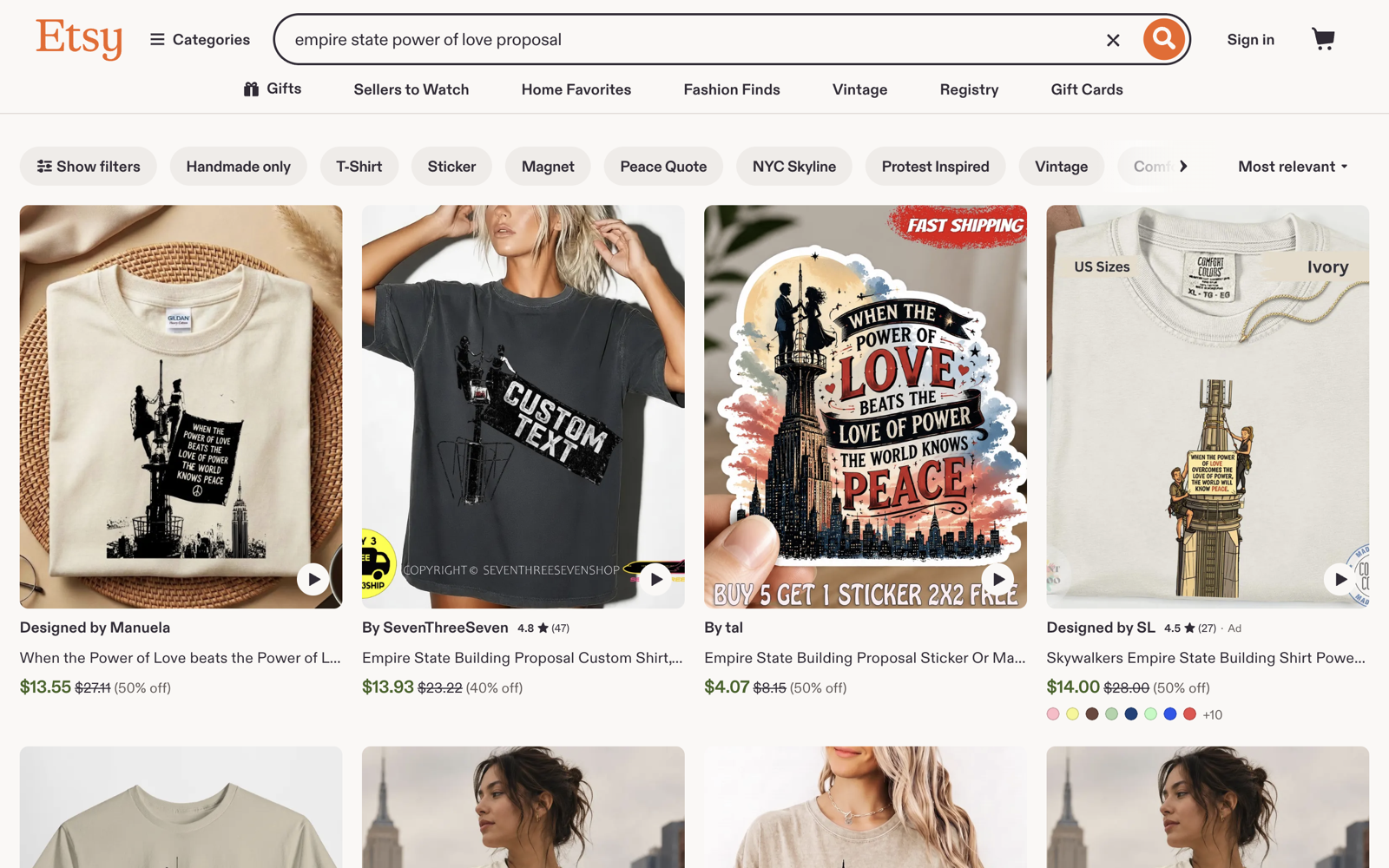
The detail that mattered most: nearly every listing was discounted, most by half. If a product is already sitting at fifty percent off at nearly every seller within the first few days, that market is already saturated. Everyone piled in at once, nobody managed to stand out, and price became the only weapon left. That's not a payoff, it's a race to the bottom.
Rule of thumb: if you're spotting a trend by its discount, you're already too late. Margin doesn't survive a saturated market.
Three legal traps hiding in viral trend products
This is the part nobody who tells you to "jump on the trend" ever mentions. Three walls you can walk straight into:
- Trademark. The Empire State Building's name and image are trademarked, and the building's ownership actively pursues unlicensed commercial use. Printing the building's name or its recognizable silhouette as is carries real takedown risk, and potentially worse.
- Personality rights. The two people in this story are real, named individuals. Some sellers printed their names directly onto products. Putting someone's name or face on a commercial product without permission is a personality rights violation.
- Glorifying a crime. The event itself was a crime, and both people were arrested. A product that celebrates an illegal act carries risk both from platform policy and from how it reflects on your brand.
I'm not handing out legal advice here, just showing you where the line sits. If you're about to ship a commercial product and you're not sure, a quick conversation with a lawyer is the cheapest insurance you'll ever buy.
Sell the feeling, not the event
So how do you actually benefit from this kind of energy without walking into the wall above? The answer is abstracting the event into a theme.
The sellable core of the Empire State story was never the event itself, it was the feeling it stirred up: a grand gesture, the courage behind falling in love out loud, one moment above a city at night. Tell that story through a generic skyline, an original typography treatment, and a universal phrase, and you tap the same nerve without borrowing anyone's trademark or name. The buyer still remembers the moment. You never sold anything that belonged to someone else.
It's not just the safer legal call, either, it's the smarter business one. A product tied directly to the event is dead in two weeks. A product tied to the theme (love, courage, the city) keeps selling long after.
The speed game: catching a trend with AI in hours, not days
The reason saturation happens so fast is simple: by the time a trend is visible, the market's already crowded. Which means the only real edge left is speed. And the engine behind speed today is AI.
The moment you spot a trend, the workflow is this: translate the feeling behind the event into a design brief, generate a handful of variations with AI image tools in minutes, pick the cleanest and most original one, and get it into your print on demand store. There was a time you'd wait days for a designer. Now you can be live within the first hour. If you want to push the visual side further, the logic in Studio Quality Etsy Product Photos Using AI applies here too.
One warning: Etsy requires you to disclose AI generated imagery in your listing description. Don't tell yourself nobody will notice. It's a rule, and skipping it puts your account at risk.
So who actually wins?
If hundreds of sellers pile onto the same trend and most of them end up discounted, where does the money actually go? Three groups:
- Whoever moved in the first hours. In before the market filled up and prices dropped, usually because they already had an audience or a store ready to go.
- Whoever sold the design instead of the t-shirt. Selling other sellers a digital design file instead of a printed product. It's the pickaxe seller in the gold rush: while everyone else is printing shirts, you're selling the design wholesale.
- Whoever found the niche angle. Taking the general theme and narrowing it to a specific audience, telling the same feeling in a different voice that stands out from the pile.
The one thing none of these three groups have in common with the crowd: they're not the ones selling the identical design at fifty percent off.
Step by step: what to do at the next viral moment
Next time the internet explodes over something, skip the panic printing and run this sequence instead:
- Separate it. Is this a video trend or a product trend? Would people actually wear it?
- Check the market live. Search Etsy. How many listings exist, and are they already discounted? If they are, you're late, go find a different angle.
- Scan for legal risk. Trademarks, a real person's name, copyrighted footage? If any of that shows up, abstract it into a theme.
- Pull out the feeling. What's the universal emotion underneath the sellable core of this event? Design around that.
- Move fast. Generate a few AI variations in the first hour, publish the cleanest one. Don't skip the AI disclosure on Etsy.
- Tie it to you. Connect the product to your own audience and your own story so it stands apart from the pile.
Keep the radar on so you're never late again
This whole post comes down to one word: speed. Trends move fast, and whoever spots them late ends up racing to the bottom with everyone else. That's the whole reason I track rising Etsy, print on demand, and AI trends as they happen, each one with a note on what you can actually do with it. Not "what happened," but "what's rising and how to act on it." The Empire State story is in there too, with the legal angle intact.
If you don't want to be the one arriving late, there's really one move: keep the radar on. Follow along, and catch the next opportunity in the first hour, before the crowd shows up.
Takeaway
Chasing trends is a game of speed and judgment, not a copying contest. The Empire State story proved it: hundreds of listings in five days, nearly all of them discounted, most either unprofitable or carrying legal risk. The winners sold the feeling instead of the event, knew where the line sat, and moved in the first hour. Next time a viral moment lands, ask these questions before you join the crowd. That's where the difference starts.
Frequently asked questions
Is it legal to sell a product based on a viral event?
Partly. The news event itself isn't anyone's property, but the trademarks, real people's names and faces, or copyrighted footage tied to that event are a separate issue. The Empire State Building's name and silhouette are trademarked, and putting the real people's names on a product crosses into a personality rights problem. The safer path is selling the general theme the event evokes, not the event itself: a city skyline, a phrase, a feeling.
How do I know I'm too late to a print on demand trend?
Price is the clearest signal. If a product is already discounted at nearly every seller within the first few days, the market is already full. Most Empire State listings were marked half off while the story was still five days old. In a saturated market, margin dies, and anyone joining late is racing everyone else to the bottom.
Is selling an Empire State t-shirt a copyright violation?
Risky. The Empire State Building's name and image are protected as a trademark, and the building's ownership actively pursues unlicensed commercial use. Putting the real people's names or faces on a product can also cross into a personality rights violation. A generic skyline paired with an original design is safer, but if you're unsure, talk to a lawyer before you list anything.
How do I design a trend product with AI?
The moment you spot the trend, translate the feeling behind it (the city, the grand gesture, the romance) into a design brief, then generate a handful of variations with AI image tools in minutes. Speed is what decides this: landing a clean, original, legally safe design in the first few hours beats joining the crowd on day three.