MIT’s FLEX Platform Helps Robots Reason Beyond Literal Commands

TL;DR
MIT engineers developed FLEX, an AI-assisted learning platform that enables robots to interpret natural language commands beyond explicit instructions. Volunteers tested the system by typing phrases like avoiding spills or fragile objects. The robot followed literal directions while reasoning at a higher level to prevent damage.
Source summary
Now, a new artificial intelligence-assisted learning platform developed by MIT engineers is enabling robots to read larger meaning into a human’s natural language commands.
She is focused on developing assistive and household robots that can carry out physical tasks, and reason and adapt in real-time, in response to a person’s natural, conversational commands.
The team’s new robot learning platform, FLEX, is a three-step process that helps a robot read more into a natural language command, beyond what it is explicitly told to do.
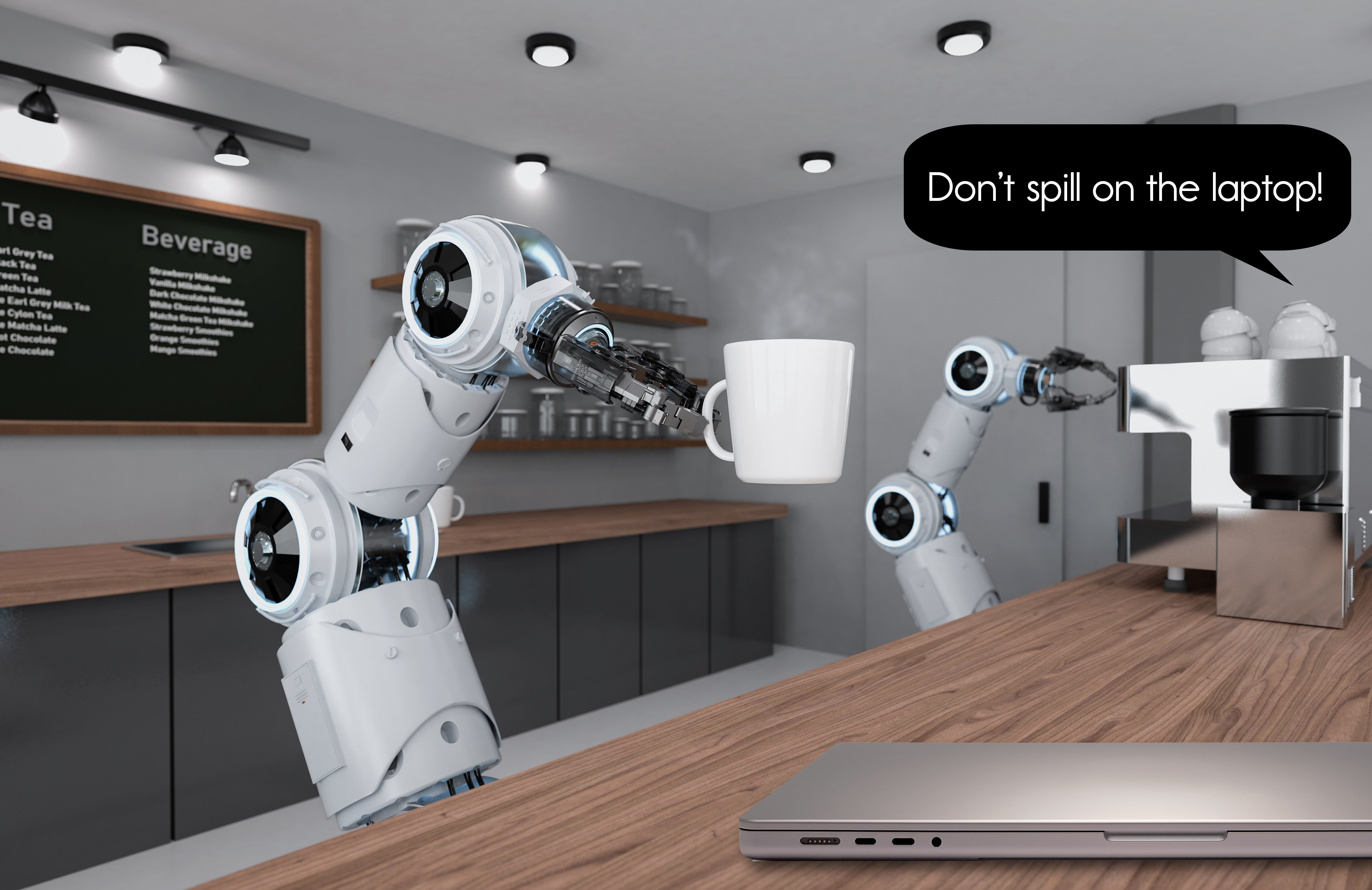
In all three scenarios, volunteers interacted with the virtual robot by typing natural language commands, such as “Don’t spill on my laptop,” “Stay away from the stack of paper,” and “Don’t drop on the mug.” With FLEX, the robot followed all three commands literally and also reasoned at a higher level to not spill on electronics, stay away from flammable objects, and not drop its cargo on fragile things.