Amazon Business hits $60 billion milestone

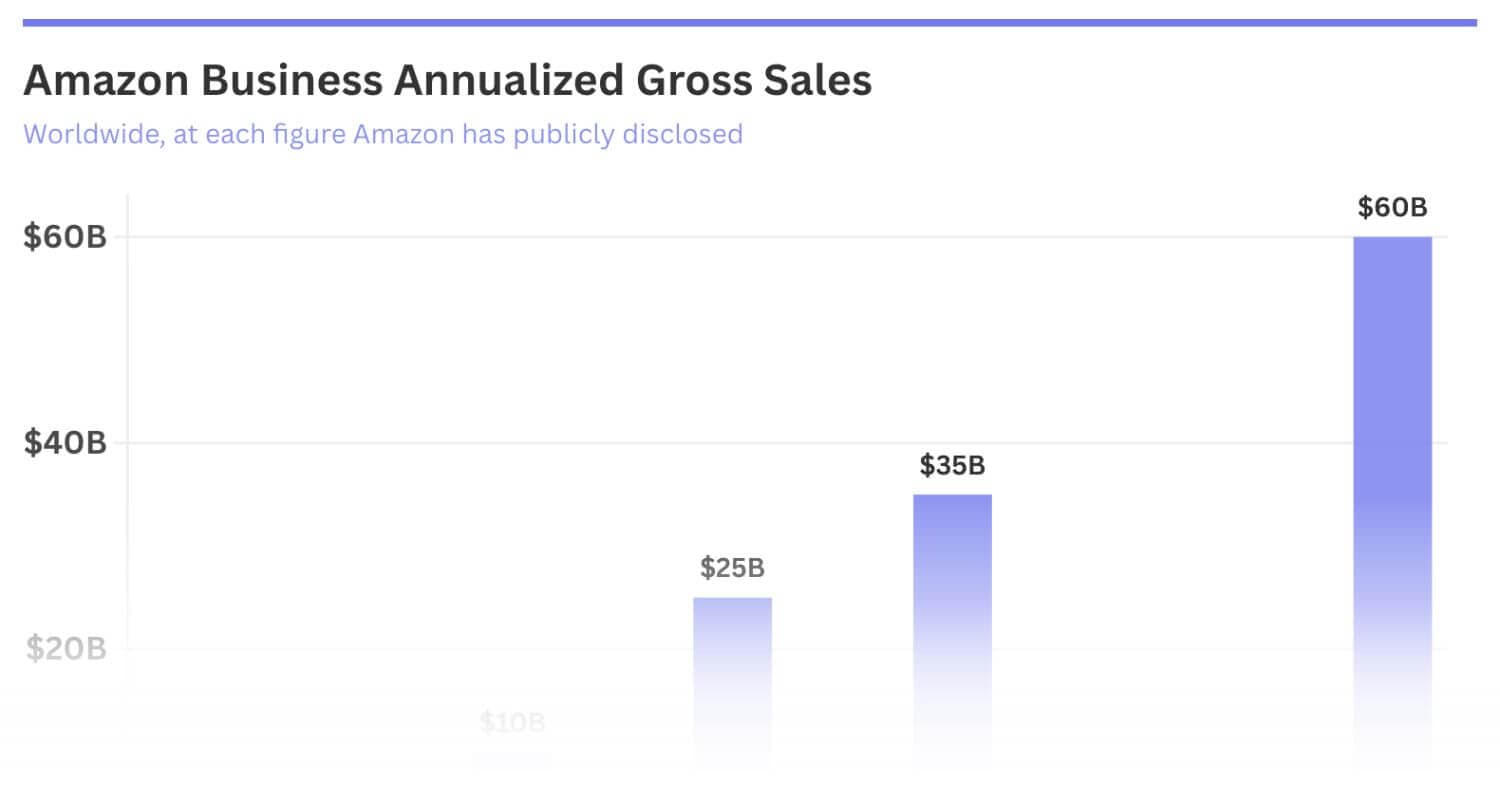
Amazon's corporate sales channel, Amazon Business, has grown rapidly to reach a $60 billion volume. This growth demonstrates the platform's dominance not just in individual consumer sales, but also in business-to-business trade.
Amazon was once synonymous with individual consumers, but B2B is now a significant revenue stream. If your products are suitable for corporate use, you shouldn't ignore opportunities on Amazon Business. This sector can provide higher volume and more consistent order flows compared to individual sales.
What to do:
If you sell on Amazon, check if your products are listed for B2B. Corporate buyers can be more loyal than individual consumers.
MK's take
Why Amazon Business's $60 Billion Milestone Matters for Your Ecommerce Strategy
Amazon Business offers higher volume and consistent orders for B2B-suitable products, but you need to adjust your listing, pricing, and fulfillment to serve business buyers.
Amazon Business hitting $60 billion in sales volume is a signal that B2B ecommerce is no longer a side channel. It's a core growth driver for Amazon. If you've been ignoring this segment because you thought Amazon was only for individual consumers, you're leaving money on the table. Business buyers behave differently: they order in bulk, expect net payment terms, and often need specific certifications or quantity discounts.
Your first step is to evaluate whether your products fit B2B demand. Office supplies, industrial tools, janitorial products, and bulk consumables are obvious candidates. But even consumer goods can work if you offer multi-pack options or subscribe-and-save for businesses. You don't need to create separate listings. Amazon Business automatically shows your products to business accounts if you enable B2B pricing and quantity discounts. That's the easiest entry point.
The caveat is that B2B buyers are more price-sensitive and demand faster shipping. You may need to adjust your fulfillment strategy, either by using FBA with bulk packaging or by setting up a separate B2B inventory pool. Also, competition on Amazon Business is growing as more sellers catch on. The honest limit is that not every product category will see a surge from B2B. Test with a small set of SKUs first. Monitor your business order volume in the B2B analytics dashboard. If you see traction, then invest in dedicated B2B listings and marketing. This milestone is a reminder to diversify your revenue streams beyond individual consumer sales.
Turn this into your workflow: AI for E-commerce Product Idea Validation: Discover Marketplace Potential · prompt library · automation library
Turn this into action
AI for E-commerce Product Idea Validation: Discover Marketplace Potential