Product selection isn't a gut call, it's a data call
Picking the wrong product on Amazon costs you months of capital and time. This lesson lays out the difference between guessing and choosing with data, what Jungle Scout actually does, and who it's for versus who should hold off.
You've decided to sell on Amazon. So here's the first question: what are you going to sell?
Most new sellers answer that with a feeling: "this product looked interesting to me," "a friend made good money on this," "this looks trendy." All of that is instinct. None of it is data.
Here's the problem: product selection is the single most important decision in your Amazon business. Once you pick a product, you find a supplier, order samples, commit to inventory, write the listing, set up ads. All of that costs time and money. Pick the wrong product, and most of that effort is wasted; switching products and starting over can take months.
The difference between guessing and using data
Guessing works like this: you like a product, you decide "this will sell," and you commit to inventory. Nobody told you how many people search for that product each month, how many competitors you're up against, or what your margin actually looks like after costs. The decision rests entirely on gut feeling.
Deciding with data means answering three questions instead: is there real demand for this product (search volume), how many sellers are splitting that demand (competition), and is there actually profit left once you sell it (margin). Skipping those three questions and picking a product anyway is investing blind.
Worth saying up front: the tool itself isn't a magic wand here. Jungle Scout gives you a window into the answers to those three questions, but you're still the one looking through it and making the call.
What Jungle Scout is
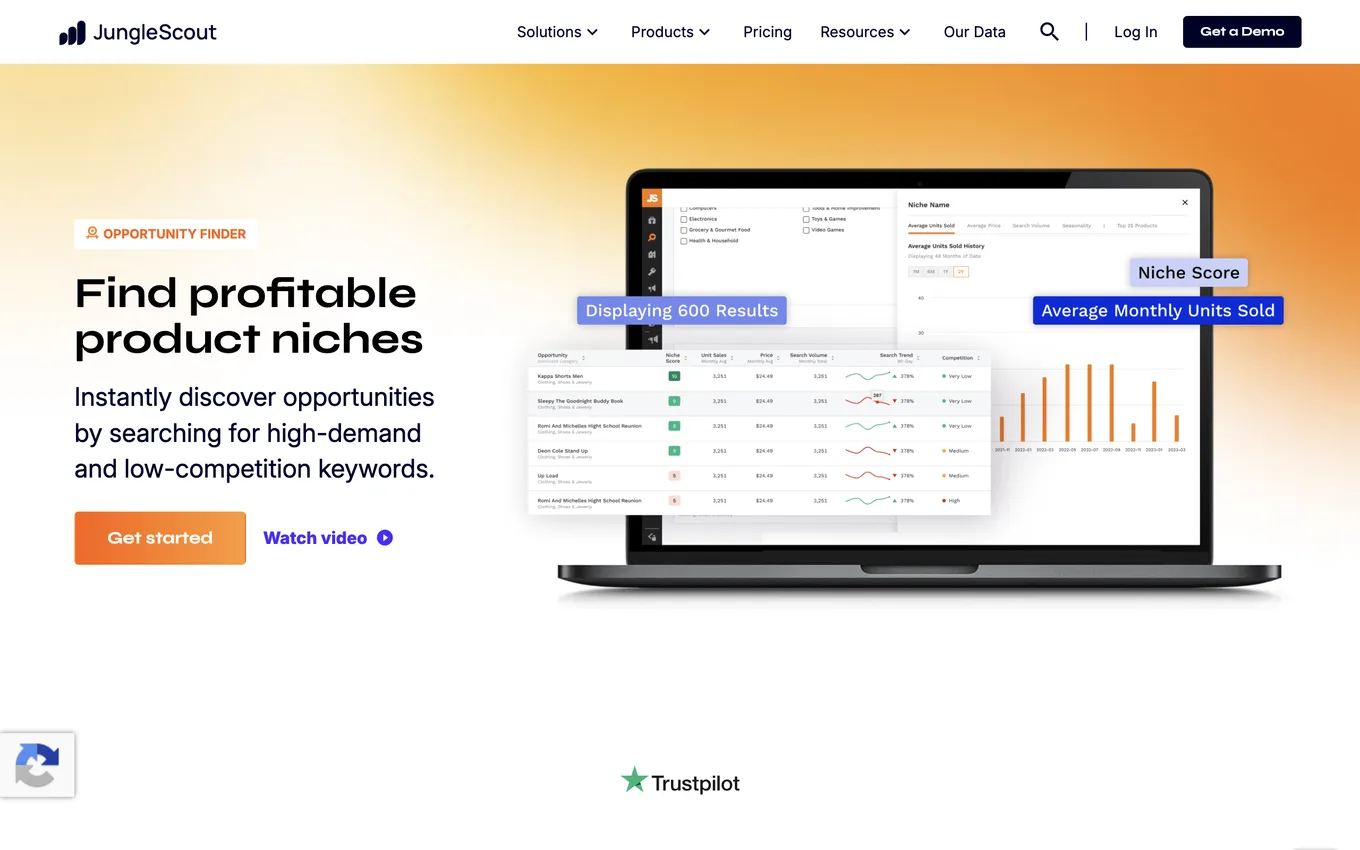
Jungle Scout is a research tool that pulls together data on products sold on Amazon into a single dashboard. Broadly, it lets you see:
- The monthly search volume for a keyword or product
- How many competitors sit in that category and their estimated sales volume
- Estimated profit margin calculations (factoring in Amazon fees, shipping, ad spend, and similar costs)
Instead of scrolling through Amazon by hand and guessing "is this actually selling well," you see the numbers directly. As of July 2026, these tools sit under Jungle Scout's Catalyst plan: Product Database, Opportunity Finder, Sales Estimator, and the keyword tools; check junglescout.com for the current full scope.
Source: junglescout.com, accessed July 2026.
Who it's for, and who should wait
Jungle Scout makes sense as an investment if you genuinely plan to sell on Amazon (or on whichever Amazon marketplace Jungle Scout supports) or want to grow an existing catalog. If you already have a clear intent, finding a new product, checking out your competitors, deciding which category to enter, the tool makes that work faster.
But for someone with no intention of selling on Amazon, it's an unnecessary expense. Someone selling handmade goods on Etsy, or a general ecommerce consultant who never touches Amazon, won't get value from opening this dashboard. The tool earns its keep where the problem exists; where the problem doesn't exist, it's just a subscription fee.
One more thing worth saying now: the sales estimates Jungle Scout gives you are, as the name suggests, estimates. Not exact figures, a probability range. Use them to set direction, not as something you can bank on as certain; I'll come back to this point in a later lesson.
Lesson checklist
- I understand why product selection is the most critical decision in an Amazon business, and what a wrong pick costs
- I understand the difference between guessing and deciding with data (demand, competition, margin)
- I know what Jungle Scout does, and that its sales estimates are probabilities, not guarantees
- I know this tool is worth it if you intend to sell on Amazon, and unnecessary if you don't
Next lesson: setting up your account and running your first niche scan, step by step.